The Teacher Talking Time Podcast
![The Imposter Syndrome Trap: The Psychological Reason You’re Not Charging What You’re Worth [and how to fix it] - Catherine Angus](https://images.squarespace-cdn.com/content/v1/5cb8c024fd679367bfb57f55/1772068049168-7GALW9T1FAPW2CNHITB8/catherine.jpg)
The Imposter Syndrome Trap: The Psychological Reason You’re Not Charging What You’re Worth [and how to fix it] - Catherine Angus
"You have to get beyond the 'it’s all about me' and get over that 'non-profit mindset' to realize you have a skillset worth an investment. Don't compromise on your value." - Catherine Angus
We sit down with Catherine Angus, founder of the Hear You Go podcast, to talk about self-worth, education businesses, and standing firm on value.
In this episode, we chat about:
starting a podcast: confidence, doubt, and the unknown
overcoming the 7-episode dropoff [where most podcasters quit]
what perfectionism actually means
why you want to be the tortoise, not the hare
social media toxicity and discovering what clients really want
why passive income is like buying a lottery ticket
using podcasts as a lead magnet, not a product
how to pivot without abandoning your mission

You Can't NOT Teach Grammar (And Why We’re Doing It Wrong) - Caitlyn Pineault
"Designing curriculum around proficiency goals for your program is a way of making them a positive, empowering tool instead of something that's punitive" - Caitlyn Pineault.
Caitlyn teaches undergraduate second language acquisition courses at Georgetown University with a dedication to connecting research and practice for language teachers. Her work can be found in the Modern Language Journal and the Foreign Language Annals.
In this episode, we chat about:
Bridging Research and Classroom Practice
The Role of Feedback in Language Learning
Student's Frustration with Language Learning
Challenges in Changing Teaching Practices
The Role of Rubrics in Reflecting Teacher Values
Assessment and Its Impact on Language Programs
Implementing TBLT in Different Educational Contexts
The Future of Language Education and Teacher Mindset
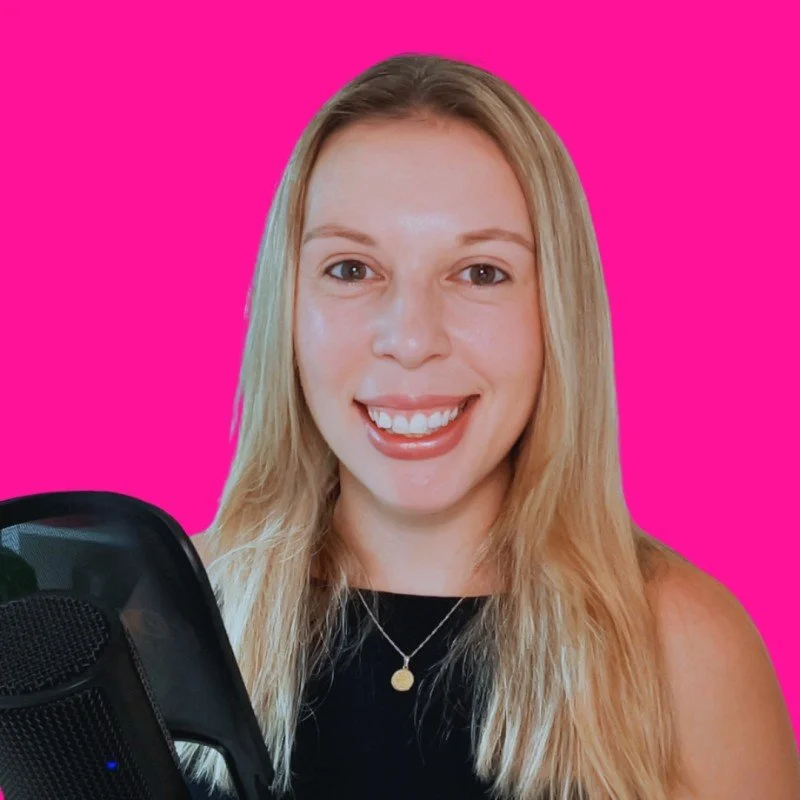
There are keys to creating content that will do what you want - going viral isn’t one of them - Laura Wilkes
"You don't have to feel confident to be great at what you do."
We chat with Laura Wilkes, founder of Communicating for Impact,to discuss content creation, putting yourself out there, and building a full-service production house.
In this episode, we chat about:
passions vs businesses
going from reluctant leader to confident director
the role of authenticity and creativity in content creation
Laura launching her own creative production house
how to stand out in saturated markets
understanding buyer psychology
the mechanisms needed to take the entrepreneurial leap

There's a problem with the word "INCLUSION." We should use THIS instead - Ben Goldstein
"You can be included and still not feel that you belong" - Ben Goldstein.
We sit down with Ben to talk inclusion in ELT - and what that actually means (and what it doesn't).
Ben is a writer, teacher trainer and conference speaker. He taught materials writing for many years on the online MATESOL program of the New School in New York. He has published two methodology handbooks for teachers: Working with Images and Language Learning with Digital Video. 30 Ideas on Inclusion in ELT, a pocket handbook for teachers has also just been published by Cambridge.

The biggest risk isn't being WRONG, it's being CONFUSED - John Healy
"Make a decision about which direction you wanna head towards. Start walking and don't do anything else for 30 days.”
We chat with John Healy about education businesses, how indecision stagnates us, and what teachers can do to execute as entrepreneurs.
John is the founder of My Speaking Score - an AI-powered platform that helps non-native English speakers prepare for the TOEFL Speaking test with confidence. From building a consulting business to teaching in Korea to now founding an edtech company, John's career in ELT is vast. He joins us to talk teaching and education businesses.

You'll never feel ready: do you want to do it or not? - Mariela Mondaca
"So many people are out there doing great things and they aren't ready, either, so I asked myself: Why not me?"
We chat with teacher and entrepreneur Mariela Mondaca.
Mariela is an English teacher, teacher trainer, and entrepreneur who has turned her 25 years of classroom experience into an online business.
She runs Fluent Connections.
In this episode, Mariela discusses:
Overcoming Self-Doubt and Taking the Leap
Believing in Your Own Path
Dealing with Self-Doubt and Anxiety
Starting and Growing a Teaching Business
Finding Your Niche and Evolving
Learning from Mistakes and Adapting
Advice for New Teaching Entrepreneur
The Turning Point: Strategy and Mindset
A Week in the Life of a Teacherpreneur
Starting Over: Key Steps and Lessons Learned
Reflecting on Personal Growth and Transformation
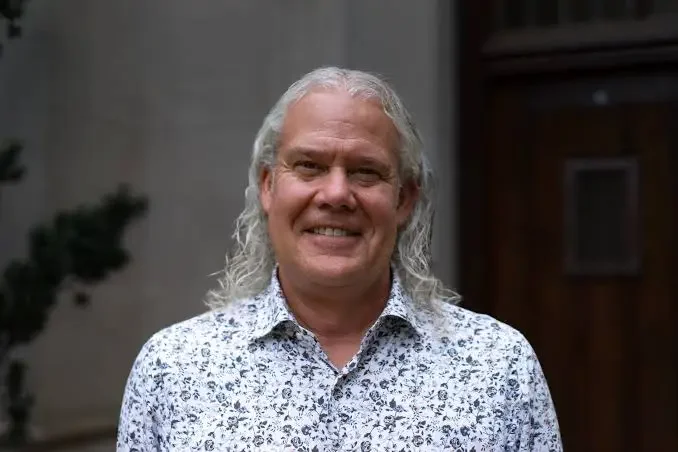
Can apps REALLY support language learning? - Shawn Loewen
"How do we make research meaningful for the classroom? What really helps students acquire grammar? Can apps ACTUALLY support second language learning?"
These are some of the questions we tackled in our conversation with Dr. Shawn Loewen.
In our discussion, we diveinto:
whether the explicit vs implicit debate matters
if people can actually learn languages on "those apps"
pattern recognition and why some learners “just get it”
task-based language teaching vs. Instructed SLA
why most institutions don't really know what their approach to learning is
leveraging AI and technology for learning
bridging the gap between researchers and teachers
the limits and potential of communicative language teaching

It's MAGICAL to feel PROUD of something you created - Anna Aleksenko
"I have no shame whatsoever in marketing my own courses because I feel proud. I know for sure that it works."
Anna is an entrepreneur based in Georgia who runs Voice it English, a program that helps professionals turn English into their career superpower. She's been teaching for over 17 years and has had to reinvent herself many times: something every entrepreneur can relate to. With a focus on connection, community, and client results, we're thrilled to have Anna on the show.

Kids do NOT learn languages faster than adults. That's a MYTH - Dr. Karen Lichtman
There's this myth that kids learn faster than adults. Research shows it's not true; adults are actually better language learners - Dr. Karen Lichtman.
Karen’s research at Binghamton University focuses on instructed second language acquisition, including age differences in language learning and implicit vs. explicit language teaching.
In this episode, we dive into:
the bad teaching that exists and how to address it
the myth of children learning faster than adults
why adults make better language learners
why easier materials is almost always better
designing a beginner course from scratch
balancing implicit & explicit teaching
addressing skeptical teachers
the role of TPRS in language learning (Teaching Proficiency through Reading and Storytelling)

You need to master the art of self-reinvention - Jessica Dias
"If it doesn't go according to plan, what is the worst thing that could happen that is the minimum I can be satisfied with?"
We sit down with entrepreneur Jessica Dias to discuss growing a business.
Jessica is an English teacher and founder of Jessy Academy — an online school that helps Brazilian learners break free from the intermediate plateau and develop real communication skills in English.
In this episode, Jessica discusses:
Overcoming Failure and Setting Realistic Goals
The Genesis of the Itch: From School to Side Hustle
Turning Passion into a Full-Time Business
Embracing Change and Growth
Building a Sustainable Business Model
Challenges of Running a Business
Balancing Client Work and Business Operations
Delegation and Use of AI Tools
Scaling While Maintaining Quality
Advice for Handling Business Slumps

Is a TRULY task-based curriculum possible? - Claudia Fernandez
From beginner to intermediate in 9 months: yes, it's possible and Claudia Fernandez tells us how.
Claudia runs her Spanish program at the University of Illinois-Chicago using a task-based curriculum. One result was bringing fifteen A1 students to intermediate over 9 months. She shares her story and how others can do the same.
In this episode, we dive into:
Implementing task-based language teaching from scratch
Why there is still pushback against TBLT
Mindset shifts every institution needs
Aligning tasks with assessments
Claudia’s experience of helping students go from absolute beginner to intermediate in 9 months
Effective task design
How learners acquire grammar through input-based approaches
Instruction habits that get in the way of learning
How to create needs analyses in task-based learning

Practice is the Price: What Teaching Taught us about Building a Business
*This launches the beginning of a new series of our show: education entrepreneurship.
In this episode, we introduce the series and discuss what it takes to start and run your own business. Specifically, we explore the transition from traditional teaching roles to entrepreneurial ventures.
We chat about:
Why waiting until you're uncomfortable might be too late to start your business
The real difference between commitment and consistency and why one matters more
How teachers can build businesses without a one-size-fits-all model
What Andrew's beach business (and Bob the Book) taught him about resourcefulness, scrappiness, and getting started
Why belief in yourself is the most underrated strategy in entrepreneurship
Who this series is for and who it’s not for

The Big BEASTS of English Grammar: What we Need to UNLEARN - Graham Burton
Does the grammar that is normally taught match the evidence corpus linguistics shows? Dr. Graham Burton helps us dissect the big beasts of English grammar.
In this episode, Graham discusses:
Corpus Linguistics in Language Teaching
Benefits of Corpus for Learners
The Big Beasts of English Grammar
Example-Driven Grammar Teaching
What Teachers Should Unlearn about Grammar
Challenges in Teaching Grammar
Prototypical vs. Natural Grammar Usage
Misconceptions in Grammar Teaching
The Evolution of Grammar Teaching
What the CELTA Should Do to "Re-do" Grammar
The History of Pedagogical Grammar
Why the word "grammar" was negative (and "structure" was used instead)

"Don't teach AT the students. Teach OFF them" - Scott Thornbury
"Don't teach at the students. Teach off them." Scott Thornbury becomes our first repeat guest and helps us dissect this and more.
Scott Thornbury is a teacher, teacher trainer, and award-winning author in English language education.
He co-authored Teaching Unplugged (2009) and Dogme in Practice (2025), both with Luke Meddings. His latest book is called Scott Thornbury's 66 Essentials of Lesson Design.
In our chat, Scott delves into:
tensions between planning & spontaneity
what an effective lesson design process looks like
if the communicative approach can be rehabilitated
shifting from surface-level communication to meaningful interaction
adapting teacher training and institutional expectations
the role of technology in education

Learner autonomy is driven by the TEACHER, not the learner - Dr. David Little
Learner autonomy is something that happens INSIDE the classroom, not out of it. Teachers can't sit back and wait for their students to become autonomous.
This is part of what the esteemed Dr. David Little shared with us in our conversation.
In this episode, David discusses:
Understanding Language Learner Autonomy
Defining Autonomy in Language Learning
Pedagogical Models for Autonomy
Autonomy in Diverse Educational Contexts
Challenges and Collaborative Solutions for Teachers
Language Learner Autonomy and Writing
Developing Reflective Dialogue in Classrooms
Practical Advice for Fostering Learner Autonomy

Native English isn’t Relevant to the Majority of English Users - Jennifer Jenkins
"It's such social injustice to expect people to use English like native English speakers, whichever country they're in."
We dive into this and English as a Lingua Franca (ELF) with Jennifer Jenkins.
Jennifer Jenkins is a British linguist and academic. She was Chair Professor of Global Englishes at the University of Southampton until her retirement in 2019 and is a leading figure in the study of English as a Lingua Franca (ELF),
In this episode, Jennifer tackles:
what English as a Lingua Franca (ELF) is
native speakers vs local speakers
why she was shunned from many rooms for her views
the cultural and linguistic bias in language testing
how tests are not predictive of academic success
the myth that ELF lowers English standards
the role of adjusting language rather than mimicking it
having a pioneer mindset even when people dismiss you
how international universities have hypocritical linguistic standards
the future of English as a global language

Native Teachers Can’t Fix Pronunciation - John Levis
Learners can think a native teacher is a vaccine against poor pronunciation. Equally, native teachers can be misinformed in thinking that students should just follow them.
We dive into pronunciation, intelligibility, and teacher effects on learner performance with the great John Levis.
In our conversation, John talks about:
accent vs pronunciation
the nativeness principle vs the intelligibility principle
how he coined "the intelligibility principle"
high and low value features of pronunciation
why some vowel sounds don't matter
native and non-native teacher effects on learner performance
learners viewing native speakers as a vaccine for poor pronunciation
some native teachers believing learners should just follow them
getting "caught" with accent
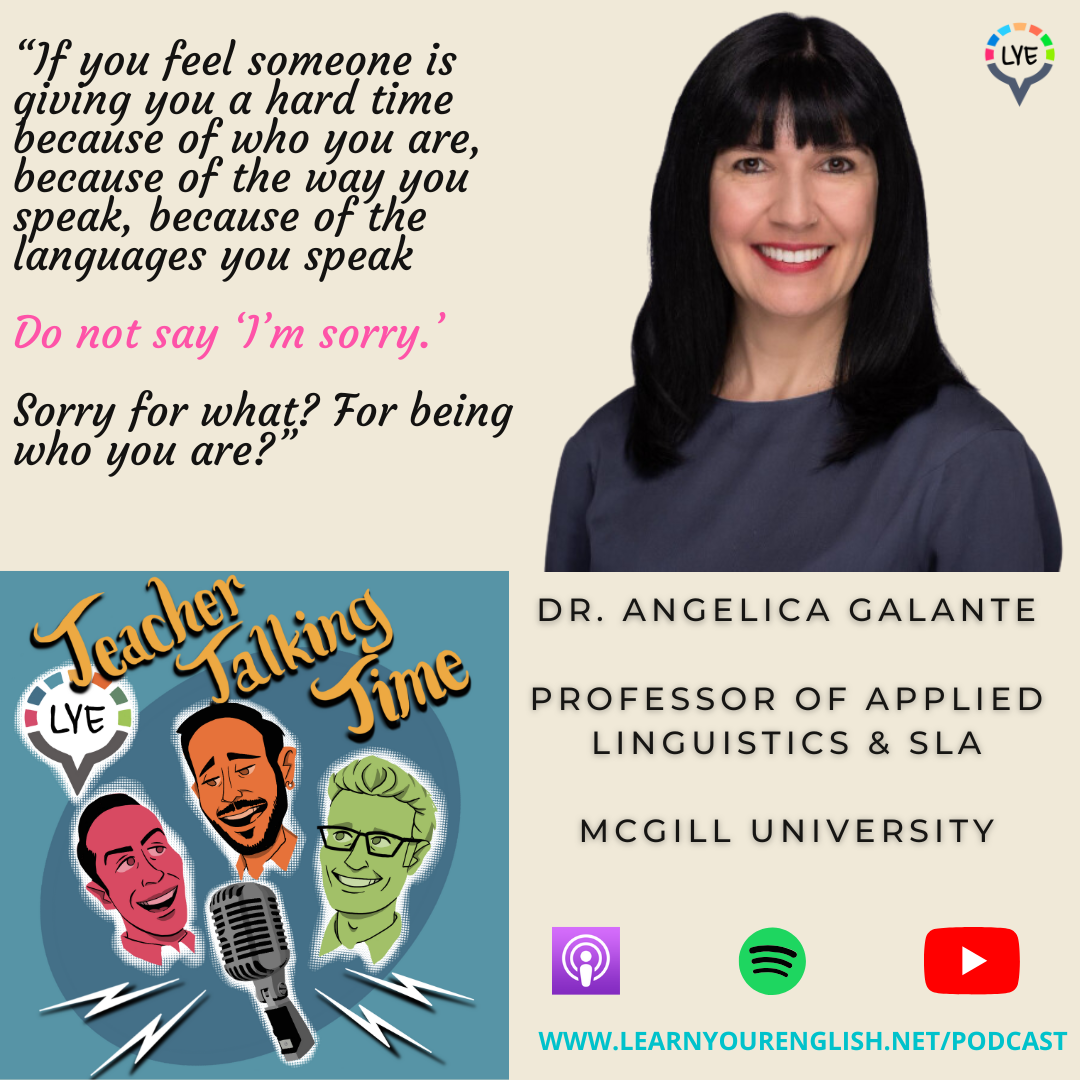
Stop Apologizing for Being Multilingual - Dr. Angelica Galante
Native speaker or non-native speaker? Monolingual or plurilingual? Why do we have a binary bias in modern society?
These are some of the questions we tackled with Dr. Angelica Galante.
n our conversation, Dr. Galante talks about:
Linguistic and Cultural Discrimination
Strategies to Combat Prejudice in Education
Plurilingual and Pluricultural Competence
Navigating Binary Bias in Language Discussions
Exploring Common Ground in Controversial Topics
The Role of Language in Identity and Mental Health
Practical Applications of Plurilingualism in Education
Balancing Plurilingualism and Language Acquisition
Challenges and Facilitators of Plurilingualism

A PLAN is not a STRATEGY: The 7 Cs of Teacherpreneur Success
Why do some teachers thrive as entrepreneurs while others struggle? We dissect this question.
Many teachers want to earn more, teach online, and gain more clients - but struggle to implement a sustainable strategy. We go over seven "Cs" to help.
In this episode, we dive into the "seven Cs of success for teacher entrepreneurship" and discuss:
confidence as a skill rather than a feeling
getting granular on goals
strategizing goal achievement at both the macro and the micro
reflecting on why having a business is (or isn't) a priority
how consistency compounds over time
why getting more clients is nearly impossible if you have nothing to sell
normalizing struggle and self doubt
first steps to starting your business in 2025

We should AIM to give more STATUS to being a teacher - Audrey Rousse-Malpat
If you use vocabulary and grammar tests, you don't teach communicatively. Audrey Rousse-Malpat tells us why.
Audrey Rousse-Malpat is an assistant professor in second language acquisition at the University of Groningen in the Netherlands
In our conversation, Audrey talks about:
thinking like a scientist
schools as factories
AIM (Accelerative Integrated Method) and how it works
feeling like the Marry Poppins of error correction
structure-based teaching vs Dynamic usage
why teachers need to relinquish control
what went wrong with the communicative approach
tips for implementing AIM
multilingual approaches in higher education
Subscribe to the Show
Teaching Talking Time is an English Language podcast aimed at teaching professionals and learners. Leo, Mike, and Andrew bring you discussions, interviews, and debates on English language training and learning. From approaches, misconceptions, and successful and failed case studies, each episode is dedicated to their vision: continual growth. They interview teachers and learners from around the world, and also debate the merits of common teaching approaches.
We release two episodes a month: one for teachers and one for students.